
A tour built for HR and people teams
See employee charging benefits in ChargeControl
Choose a time with our team and focus on policy, payroll integration, and employee experience.
Schedule a demoFor HR and people teams
Support home and workplace charging for employees with clear policy, less manual admin, and a straight line to payroll.
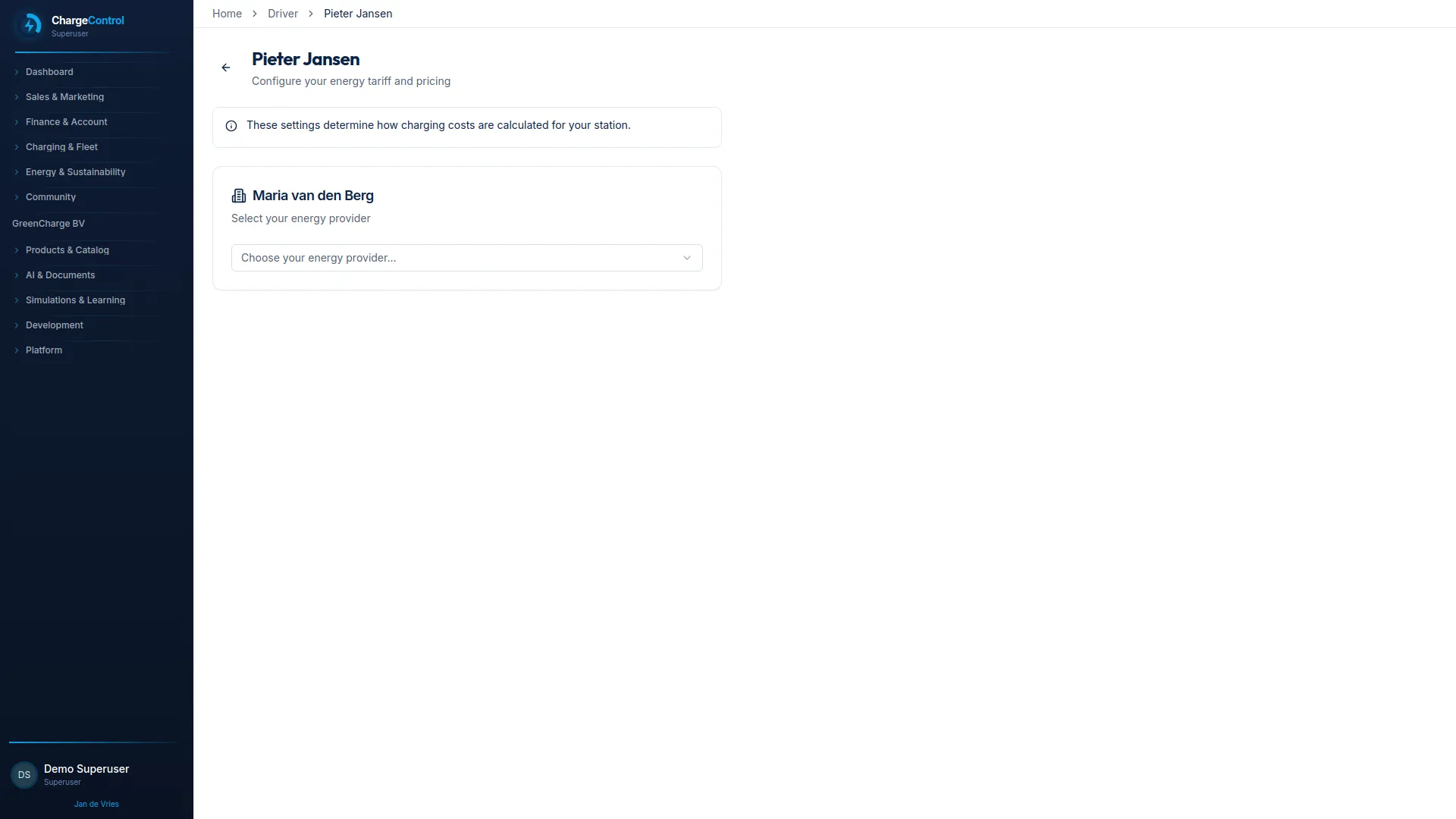
HR and people teams are often asked to support employee charging without a system that manages policy, settlement, and payroll handoffs consistently. ChargeControl connects home and workplace charging policy to ChargeBack reimbursement, so settled amounts can move into payroll without manual reconciliation.
That means employees get consistent treatment, and HR spends less time answering the same questions about status and eligibility.
HR teams are often asked to support employee charging without the tools to manage policy, exceptions, or payroll handoffs.
Charging benefits can be applied unevenly across employees without a shared source of truth.
Tracking sessions, costs, and reimbursement eligibility by hand does not scale with headcount.
Moving reimbursement data into payroll often depends on manual exports and reconciliation.
HR fields the same charging and reimbursement questions that a clearer system could answer directly.
A repeatable path from policy to payroll for employee charging benefits.
Set eligibility, limits, and approval rules for home and workplace charging.
Give employees the access and information they need to start charging under policy.
Home and workplace charging sessions are recorded without manual reporting.
Reimbursement amounts are calculated from session data according to policy.
Settled amounts move into payroll processes without manual re-entry.
Resolve missing or disputed sessions before they affect payroll timing.
The ChargeControl capabilities that connect charging policy to payroll and employee support.
Automates reimbursement calculation for home and workplace charging.
Keeps home charging sessions and policy visible for employee benefits.
Manages on-site charging access and cost attribution by employee.
Connects reimbursement data to payroll and HR systems.
A ChargeControl view that keeps employee charging activity and reimbursement status together for HR.
See how charging policy is applied across employees in one place.
Follow settlement from session data to payroll-ready output.
Give employees enough visibility that routine questions do not all land with HR.
Employee charging benefits work best when policy, payroll integration, and employee communication are planned together.
Define eligibility, limits, and approval rules before rollout begins.
Connect settlement output to the payroll systems HR already uses.
Explain what employees can expect from charging benefits and support.
Clarify who owns policy changes, exceptions, and ongoing support.
The outcomes HR teams need as employee charging benefits scale across more people and locations.
Automated settlement reduces manual tracking as more employees participate.
The same rules apply across employees, sites, and charging domains.
Reimbursement data reaches payroll in a form that does not require rework.
Clear roles and self-serve visibility reduce how often HR resolves individual questions.
ChargeBack calculates reimbursement from session data, and settled amounts can be handed off to the payroll systems HR already uses.
Policy rules are defined once and applied consistently across home and workplace charging, rather than tracked manually per employee.
Employees can typically see their own session and reimbursement status, reducing routine questions to HR.
Yes. Home and workplace charging both feed into the same policy and settlement process.
Typical work includes defining policy, connecting payroll systems, and agreeing on roles for exceptions and support.
Reimbursement relies on session and cost data needed for settlement. Exact data handling is confirmed during implementation planning.
A tour built for HR and people teams
Choose a time with our team and focus on policy, payroll integration, and employee experience.
Schedule a demoPrefer a conversation?
Tell us about your employee charging benefit and we will follow up with the right ChargeControl specialist.
Request a callbackWe respect your privacy. No spam, ever.